
What Are Intraocular Lenses?
Intraocular Lenses: Definition and Purpose
Intraocular lenses (IOLs), also known as intraocular implants, are artificial lenses surgically implanted in the eye to correct various eye conditions and refractive errors. They are the only effective solution to restore proper visual acuity in cases of cataracts. When the eye’s natural lens becomes cloudy, it must be removed and replaced with an implant during surgery.
What Are Intraocular Lenses Used For?
Today, intraocular lenses are used to correct various eye conditions and refractive errors, such as cataracts, farsightedness, nearsightedness, and astigmatism. These lenses help patients improve their vision and, in many cases, reduce or even eliminate the need for glasses or contact lenses.
Types of Intraocular Lenses
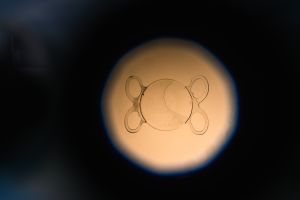
There are two types of intraocular lenses based on where they are implanted. The choice of lens depends on the patient’s specific needs, the eye condition to be corrected, lifestyle, and professional requirements.
Phakic Intraocular Lenses (PIOLs)
There are two main types of phakic intraocular lenses, depending on where they are implanted in the eye. The choice of lens depends on the patient’s specific needs, the eye condition to be corrected, lifestyle, and professional requirements.
Phakic lenses are used to correct refractive errors without replacing the eye’s natural lens. They are chosen based on individual visual needs and are not used in cases of cataracts.
Pseudophakic Intraocular Lenses (IOLs)
Unlike phakic lenses, pseudophakic intraocular lenses completely replace the eye’s natural lens. These lenses are implanted when the natural lens loses its transparency due to aging. They are commonly used in the treatment of cataracts, presbyopia, and other refractive errors.
Pseudophakic lenses are classified into different types based on the patient’s visual needs:
- Monofocal IOLs: Designed to correct vision at a single distance, usually for distance vision. They are the most commonly used lenses for cataract surgery. In addition to cataracts, they can correct myopia or hyperopia and may be toric to correct astigmatism. However, they are not typically used to correct presbyopia, so patients with presbyopia may still need glasses for near or intermediate tasks.
- Multifocal IOLs: These lenses provide vision correction at multiple distances—near, intermediate, and far. They are used to correct presbyopia and also address myopia or hyperopia. Toric versions are available for patients with astigmatism.
- Extended Depth of Focus (EDOF) IOLs: A newer option that improves intermediate and distance vision. These lenses correct presbyopia up to intermediate distances. Depending on the patient’s activities, reading glasses may still be needed for very close tasks.
Intraocular Lens Price
The cost of intraocular lens surgery can vary significantly depending on the healthcare system of the country where the procedure is performed, the ophthalmology clinic in charge, and factors such as the refractive error being corrected or the type of intraocular lens selected. It is essential to consult a specialist to receive a personalized quote tailored to individual needs.
If you have questions about how to care for your eye health, the best option is always to visit an ophthalmologist for a comprehensive eye exam and to rule out any potential issues or conditions.